
.svg)


Blog
Welcome to the Areeb Blog where tech gets real ideas get loud and jargon takes the back seat This isn't your average blog with dry updates and corporate fluff Here we drop smart insights with personality mixing innovation with just the right amount of attitude. So grab a coffee dive in and get ready to laugh learn and maybe even question everything you thought you knew about tech This is where Areeb's brain meets its blog voice and it's got jokes.
The Future of Solar Energy in Egypt: Ambition, Action, and Opportunity
Oct 31, 2025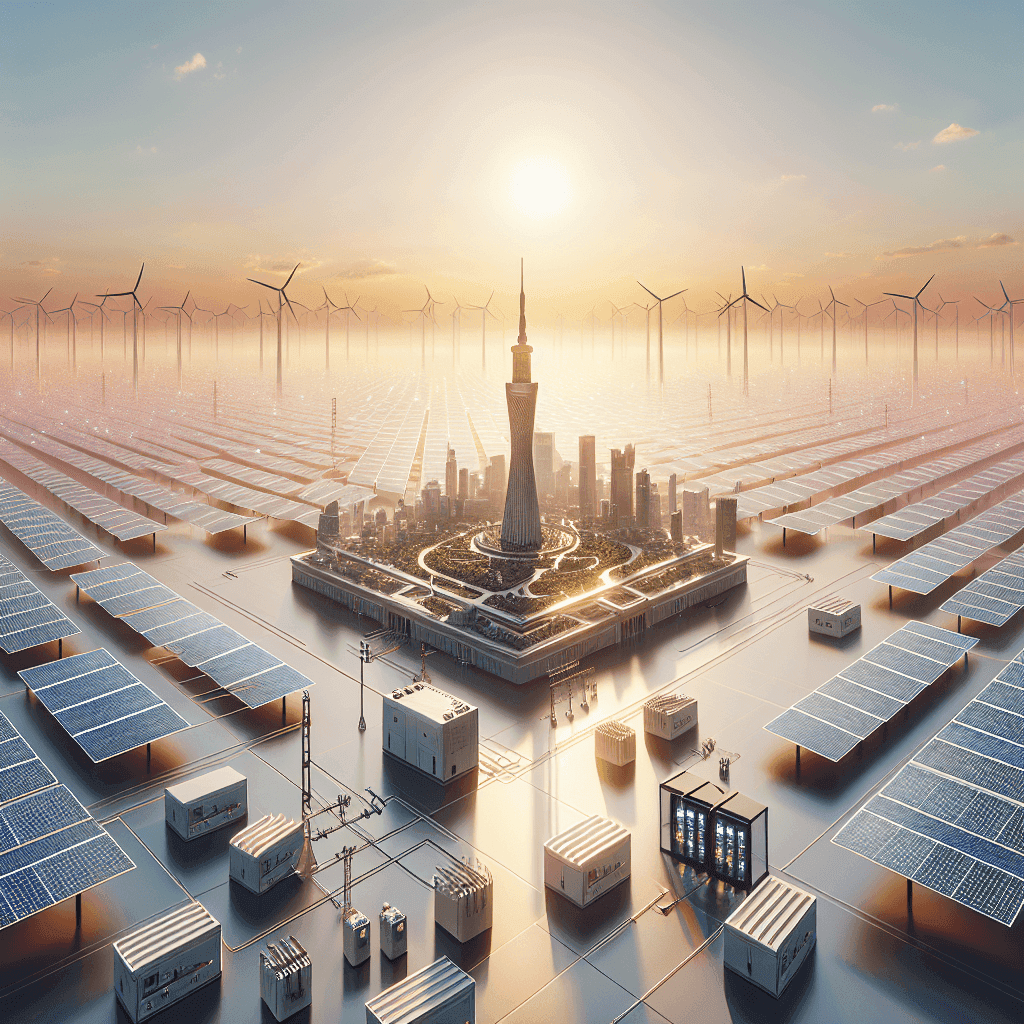
Egypt is rapidly emerging as a leader in solar energy across the Middle East and North Africa, leveraging renewable resources to meet growing energy demands and reduce carbon emissions.
Introduction: Egypt is rapidly emerging as a leader in solar energy across the Middle East and North Africa. With its abundant sunshine and increasing energy requirements, the nation is leveraging solar power to confront rising demand, reduce carbon emissions, and future-proof its energy security. Egypt’s Vision 2030 policy has made renewables, especially solar, a central development priority. Recent findings highlight an accelerated rollout of solar capacity, regulatory reforms, and surging investments—positioning Egypt for transformative growth and offering a blueprint for sustainable energy throughout the region.
Government Initiatives Powering Solar Growth
Egypt’s solar ascendancy is built on robust government engagement and progressive policy frameworks. The nation aims for renewables to contribute 20% of electricity by 2025 and an ambitious 42% by 2035. Core policy pillars include:
- Transparent and competitive project bidding, ensuring fair market access for new players and international consortia
- Incentives such as tax exemptions, subsidized land, and favorable tariffs, significantly de-risking investment
- High-level partnerships with global entities for knowledge transfer and capacity building, improving local expertise and technical standards
- Flagship projects like the Benban Solar Park, one of the world’s largest, which symbolizes Egypt’s commitment and showcases its potential as a regional leader
Furthermore, policy reforms have created streamlined approval processes and established feed-in tariffs, making Egypt’s solar sector increasingly attractive to private and foreign investors.
Recent Developments and Investment Momentum
The Egyptian solar sector has become a magnet for both local and international capital, driving expansion in both grid-scale and distributed solar systems. Notable recent developments include:
- Plans underway to add at least 2 GW of renewable capacity by 2025, prioritizing large solar plants alongside wind and hydropower
- Allocation of over EGP 136 billion towards power grid modernization, aimed at grid stability, capacity expansion, and integration of renewables—this also reinforces plans to export clean energy to neighboring countries
- Adoption of investor-friendly regulations that reduce bureaucratic hurdles and incentivize the participation of small and medium-sized enterprises (SMEs) in the solar market
Large-scale financing agreements and the establishment of specialized renewable energy banks further boost the pace of solar energy infrastructure development, making Egypt one of the most promising solar investment destinations in the region.
Challenges on the Road to Solar Dominance
Despite its momentum, Egypt’s journey toward solar energy leadership is not without hurdles. Key challenges include:
- Grid Integration: The rapid increase in solar capacity necessitates ongoing upgrades to the transmission and distribution infrastructure to ensure reliability and manage intermittent output.
- Financing Accessibility: While major projects attract significant funding, smaller companies and rural initiatives often face financing barriers. Enhancing microfinance, blended finance, and government-backed loan guarantees can bridge this gap.
- Regulatory Complexity: Overlapping approval processes and varying permitting standards remain a challenge. Streamlining these procedures will be essential to expand distributed and off-grid solar solutions.
- Land and Sustainability Concerns: Large solar installations require significant land, raising environmental and community impacts. Balancing land use, water consumption for cleaning panels, and biodiversity conservation is crucial for sustainable growth.
Tech Trends and Innovation in Egypt’s Solar Industry
Technological innovation is reshaping Egypt’s solar landscape, accelerating its transition to a decentralized, resilient, and smarter energy system. Key advances include:
- Rooftop Solar and Distributed PV: Residential, commercial, and industrial rooftop solar adoption is surging, offering localized energy generation, reducing grid strain, and providing cost savings for end users.
- Battery Storage and Hybrid Systems: Battery storage systems are increasingly deployed to stabilize output and store excess solar energy, while hybrid projects integrate solar with wind or diesel backup for enhanced reliability.
- AI-Driven Grid Management: Digital tools, including artificial intelligence and real-time data analytics, are being used to optimize grid operation, forecast demand, and predict maintenance needs—fostering a more adaptive and resilient national grid.
- Local Manufacturing: A growing number of Egyptian companies are investing in domestic production of solar panels, inverters, and balance-of-system components. This not only reduces dependency on imports but also creates job opportunities and develops local value chains.
Opportunities for Decentralization and Energy Export
Emerging trends point toward a future where Egypt leverages its solar potential for decentralized electrification and regional power exports. Highlights include:
- Expansion of mini-grids and off-grid solar projects in underserved rural areas, improving energy access and supporting community development
- Pilot projects integrating agriculture and solar energy (agrivoltaics) that enable dual land use while promoting economic resilience
- Strategic infrastructure investments that position Egypt as a regional clean energy hub, facilitating electricity exports to Europe, Africa, and the wider Arab world
Such diversification not only broadens the domestic energy portfolio but also enables Egypt to play a pivotal role in regional energy security and climate change mitigation efforts.
Policy and Market Recommendations for Future Success
To fully capitalize on its solar opportunity, Egypt should consider:
- Continuing to foster public-private partnerships, leveraging international finance, and ensuring policy stability
- Enhancing training and skills programs to build a robust, future-ready workforce in solar technology and project management
- Accelerating efforts to streamline regulation, reduce project lead times, and simplify access to incentives for smaller developers
- Focusing on sustainability best practices—including lifecycle assessments, recycling of solar modules, and protection of sensitive land—to minimize environmental impacts as large-scale deployment accelerates
Strategic Outlook and Key Takeaways
Egypt’s solar future stands out as both ambitious and actionable. The confluence of visionary policy, substantial investment, and rapid technological advancement is transforming the nation into a solar powerhouse. To sustain this growth trajectory, Egypt will need to:
- Maintain and build upon supportive government policy and robust investor confidence
- Champion decentralized, tech-driven approaches to meet distributed energy needs
- Tackle grid, regulatory, and sustainability barriers head-on to ensure the resilience and inclusivity of its transition
Conclusion
Egypt is ushering in a new era of energy with solar at its heart. The combination of forward-looking policies, escalating investments, and a wave of technological innovation sets the stage for long-term energy security and economic competitiveness. By advancing its Vision 2030 agenda, Egypt’s ongoing solar transformation stands as a beacon for sustainable development and regional leadership in clean energy.